
Phone Number
93845883251
Contact Us for Help
Contact with us through our representative or submit a business inquiry online.
CONTACT US
Our Values
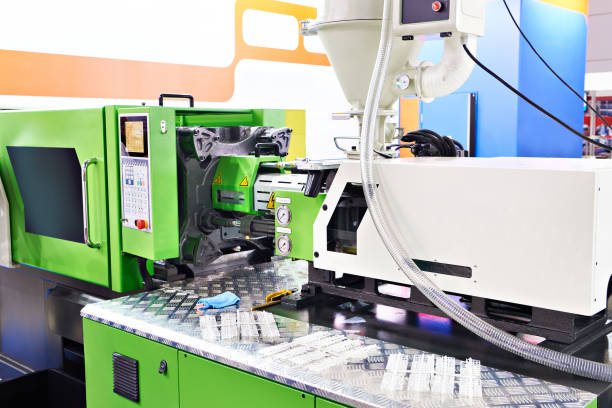
Die casting mold is a manufacturing process used to produce metal parts with high precision and quality. The process involves injecting molten metal into a mold cavity, which is typically made of steel, to create intricate and detailed parts. Here is an overview of the die casting mold process
Designing the Mold
The first step involves designing the die casting mold. This includes creating detailed specifications for the part to be produced, as well as designing the mold cavity and the gating system.
Computer-Aided Design (CAD) software is often used for designing the mold, allowing for precise and complex shapes.
Mold Fabrication
Once the mold design is finalized, the actual mold is fabricated. This is typically done using high-quality tool steel, and the fabrication process may involve CNC machining or other precision techniques.
The mold is constructed in two halves, with each half containing a cavity that, when joined, forms the shape of the desired part.
Assembly of the Mold
The two halves of the mold are assembled, and any necessary components, such as ejector pins and cooling channels, are added.
The mold is then mounted into a die casting machine.
Preparation for Casting
Before casting, the mold is sprayed with a release agent to facilitate the removal of the finished part.
The mold is closed, and the machine is prepared for the casting process.
Injection of Molten Metal
Molten metal, typically aluminum, zinc, or magnesium, is heated to a precise temperature and injected into the closed mold cavity at high pressure.
The pressure ensures that the molten metal fills the entire cavity and solidifies quickly to form the desired part shape.
Cooling and Solidification
The molten metal quickly cools and solidifies within the mold cavity.
The cooling process can be controlled using cooling channels within the mold to achieve the desired part properties.
Mold Opening and Ejection
Once the metal has solidified, the mold is opened, revealing the finished part inside.
Ejector pins or other mechanisms are used to push the part out of the mold.
Trimming and Finishing
The cast part may have excess material, known as flashing, which is trimmed off to achieve the final shape.
Additional finishing processes, such as machining or surface treatments, may be applied to meet specific quality requirements.
Quality Inspection
The finished parts undergo thorough inspection to ensure they meet the specified dimensions, surface finish, and other quality criteria..
Best equipment machinehot-chamber and cold-chamber
|
Affordable pricehigh-quality products at affordable prices
|
User friendlywell designed and easy to use.
|
ModernCNC machining to which you inject the liquid metal..
|
Experiencefulfilling and engaging experience for our employees.
|
Productive outcomeworking hard and getting good results
|
Investment in R&D: Allocate resources to research and development.
|
Supply Chain ManagementThis is crucial for meeting production schedules and customer demands.
|
The main die casting alloys are: zinc, aluminium, magnesium, copper, lead, and tin; although uncommon, ferrous die casting is also possible. Specific die casting alloys include: zinc aluminium; aluminium to, e.g. The Aluminum Association (AA) standards: AA 380, AA 384, AA 386, AA 390; and AZ91D magnesium.
Die casting consists of three elements: alloy, the raw material, a die casting machine and die. It is a process to inject molten alloy (melt) into the die under high pressure, which is said to be the shortest one from the raw material to the product.
Die casting is often used to make components for the automotive industry or decorative hardware and many other small components. In fact, die-cast parts can be found in many things; you are probably just unaware that they are made from die-cast metal. Locks and gears are common finished products
Moreover, high pressure zinc die casting parts are typically stronger than aluminum pressure die casting parts. The injection process, in both methods, occurs at high pressures typically ranging from 1,500 to 25,000 PSI. This process takes place in a fraction of seconds.